

Brent Marchant
@Brent_Marchant
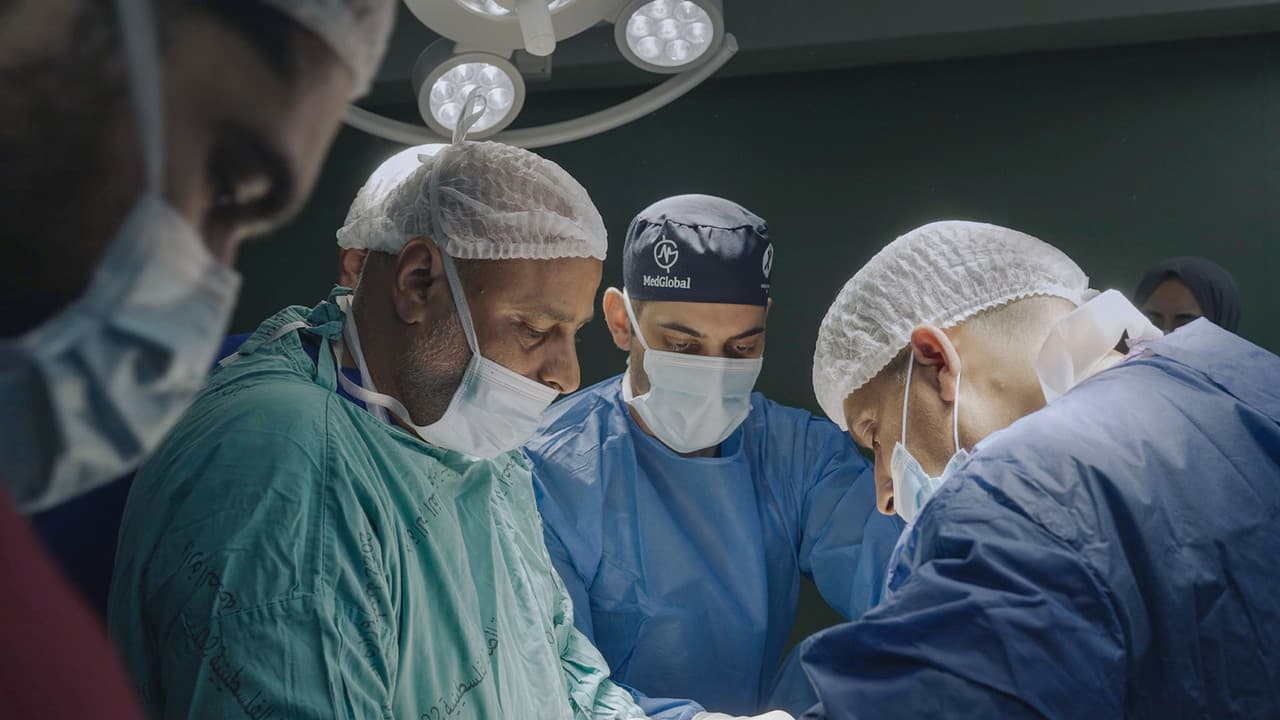
Few movies leave viewers lost for words, but director Poh Si Teng’s first full-feature effort is one such film to do just that. This documentary chronicling the experiences of three American physicians doing their part to treat the countless casualties wounded in Israel’s genocidal war with the Occupied Palestinian Territory of Gaza is a revelatory work from which it’s impossible to look away despite the shockingly barbaric events playing out on screen. In telling this story, audiences are introduced to Dr. Mark Perlmutter, a Jewish orthopedic surgeon from North Carolina, Dr. Feroze Sidhwa, a Zoroastrian critical care surgeon from California, and Dr. Thaer Ahmad, a Palestinian emergency medicine physician and humanitarian activist from Illinois, in their efforts to make a difference in the health and well-being of Gaza residents. However, as soon becomes apparent, these intrepid healers are up against more than just caring for the physical maladies of the wounded. They face threats to their lives and safety in the wake of Israel’s relentless onslaught against Palestine, inflicting damage that utterly defies description – and believability. Of course, that’s if the physicians are even allowed to enter Gaza, given the avalanche of bureaucratic nightmares required for entry. Should they be allowed in, though, they must operate under conditions that are wholly inadequate to tend to the endless stream of injured, especially when hospital facilities are specifically targeted for attack by the Israeli government, an unconscionable violation of Geneva Convention stipulations. They’re also left to treat an unspeakable number of pre-teen children who are intentionally inflicted with head and chest wounds – a number 600 times greater than what the youth of Ukraine face. And, if all that weren’t enough, physicians and other health care workers who dare speak out about such atrocities and deplorable working conditions often face deplorable hate speech attacks and professional retribution from medical organizations and government agencies, major threats to their careers simply for wanting to help make people well. All of which point to an underlying cause that has little to do with medicine and more to do with politics, specifically virtually unwavering support for the policies of the Israeli government and military, including by US officials. Such circumstances inevitably take a personal toll on these dedicated individuals, too, so much so that they’re frequently wracked with guilt and leaving them asking, “Have we done enough?”, no matter how much they may have already done. It’s a truly damning indictment of those running things behind the scenes. In fact, if I were to make any improvements to this film, it would be in the editing, particularly the nonlinear timeline of the doctors’ experiences, but that’s a minor fault compared to the picture’s many other assets. As noted previously, “American Doctor” can indeed be a difficult watch, given its often-graphic nature. But it’s also a *necessary* watch to see what’s really unfolding in Gaza, particularly its depictions of carnage that likely can’t be seen anywhere else except perhaps on alternative internet and social media sites. This is truly a probably – and eminently deserving – candidate for serious awards season consideration. Words like “heartbreaking” and “infuriating” might well come to mind from viewing this release, and that’s a start to creating greater awareness. But that’s not likely to happen until more eyes are sufficiently opened – and that’s something this offering certainly does commendably with power, impact, and, above all, compassion.